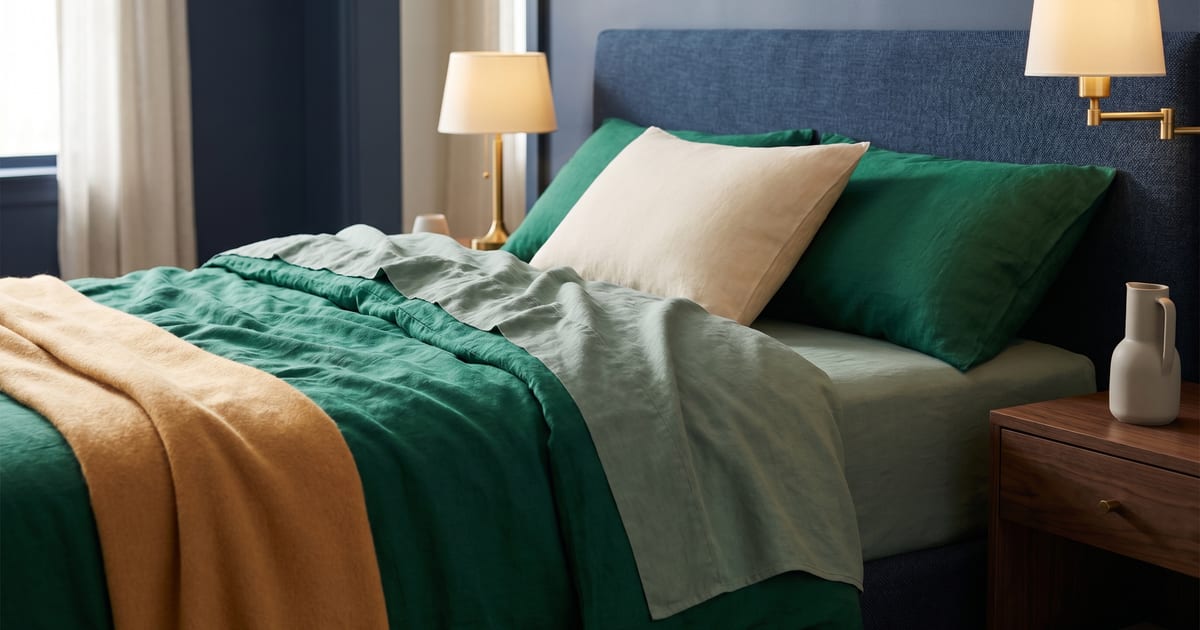
The Bedroom Photo That Converts
Sources: Booking.com Partner Hub bedroom-staging spec (verified April 2026 via Playwright), Cornell Center for Hospitality Research eye-tracking study, peer-reviewed Tourism Management Perspectives hedonic-cover-photo research, Journal of Travel Research paper on consumer photo reviews and envy, Journal of Hospitality Marketing & Management research on photo presentation, Sage Journals research on Airbnb cover-photo shot-scale, Airbnb internal photo-impact data. Last reviewed: 2026-04-18.
Key takeaways
The bedroom is the photo a prospective guest spends the most fixation time on inside the consideration set, per Cornell eye-tracking research 1. It is also the photo most hoteliers shoot the worst: tight crops, midday flat light, unmade-looking beds, visible cables and laundry. Booking.com's 2026 spec lists seven specific bedroom-staging requirements 2. When OTALift audits client listings, most have two or three elements missing on at least one room type.
Two peer-reviewed findings from 2025 matter for the framing of the shot itself. The Park and Lee study in the Journal of Travel Research documents that consumer-generated photo reviews drive luxury hotel booking intentions through envy, strongest when the photo helps the prospective guest mentally simulate themselves into the experience 3. Separately, Jia, Jiang, and Wang (Sage Journals) found that on Airbnb cover photos, medium shots (subject plus context) outperform tight close-ups for booking conversion 4. Taken together, both point to a wider, contextual bedroom shot over the catalog-style headboard close-up.
Why it moves bookings
Cornell's eye-tracking work (Noone and Robson, 32 participants booking hotels online) found that within the consideration set of about seven properties, consumers fixate most on images, ahead of firm-provided descriptions, price, or ratings 1. The cover photo earns the click; the bedroom photo earns the booking decision once the user is on the property page.
Two specific findings from the same Cornell study apply directly to bedroom photography. First, hotel-generated (professional) images are sought out far more than user-generated images. A bedroom shot that reads as "phone snapshot from the corner" loses to a hotel-generated equivalent even at the same review score. Second, prospective guests fixate longest on images that help them simulate the experience.
The Park and Lee 2025 envy mechanism deepens the second finding 3. Photos that depict the experience as desirable (warm light, made bed, view visible, atmospheric) trigger envy in prospective viewers in ways that documentary photos do not. For a bedroom shot, this means: shoot for the moment of arrival on the bed at sunset, not the empty room at noon.
The Jia, Jiang, Wang 2025 study on shot-scale presentation found that medium shots (subject plus context) outperformed tight close-ups for booking conversion on Airbnb listings 4. Translated to a hotel bedroom: corner-of-the-room framing that captures bed plus window plus wall surface beats a tight headboard crop.
Airbnb's internal data, cited via aggregator, shows listings with professional photos earn up to 40 percent more per night and are booked 24 percent more often than comparable listings without 5. The mechanism is consistent across Booking.com and Expedia: the photo set is the second-stage consideration filter, and a hotel that loses on bedroom photo quality loses bookings even after winning the click.
The Journal of Hospitality Marketing & Management research on photo presentation found that more photos, organized photos, and a first photo congruent with the headline all enhance booking intention 6. For bedroom photography specifically, this means: the bedroom photos should match the room type description, the staging should match the brand promise, and the order should put the strongest bedroom shot first.
Booking.com names Property page score as one of its five officially-confirmed ranking factors. The official definition includes "content, pictures, descriptions, and amenities" 7. Bedroom photo quality contributes to that score directly.
What "great" looks like
The Booking.com 2026 bedroom spec, verbatim from the Partner Hub page (verified via Playwright on 2026-04-18) 2:
Your rooms or units should have:
- Curtains opened so views are visible
- Ambient lighting and lamps turned on
- Freshly made beds
- Clean surfaces
- Spotless carpets and flooring
- No laundry showing
- No wires and cables visible
That is the spec. Read it twice. Then walk into one of your bedrooms with your phone open to the live photo gallery on Booking and check each item against what's on screen.
Three angles that cover most room types
- Hero angle: from the corner, capturing bed plus window. The Booking composition guidance applies directly: "Shoot from room corners to add perspective and depth" 2. The Jia 2025 medium-shot finding supports the same framing: subject plus context 4. Frame the bed at the center, with the window or view visible behind or beside it. Curtains open. Lamps on.
- Detail angle: amenities tray or workspace. Show what makes this room different from the budget hotel down the street. Booking specifically recommends photos of in-room amenities: tea and coffee, refrigerators, air-conditioning units, glasses and mugs, minibar, in-room safe, desk and stationery 2.
- View angle: from the bed looking out. If the room has a view, show it from the angle the guest will see it from, not from outside the building.
What hedonic bedroom photography looks like
The 2025 Tourism Management Perspectives research by Xi, Hao, Cai, Zhang, and Li found that hedonic-value appeals (photos that trigger imagination of the experience) significantly outperform utilitarian appeals on click-through intention, booking intention, and willingness to pay 8. For a bedroom, hedonic looks like warm light, a made bed with crisp linens, view visible, ambient atmosphere over functional documentation. Utilitarian looks like harsh light, every detail visible, no atmosphere.
A great bedroom photo reads as arrival after a long flight. A weak one reads as a catalog page.
Common failure modes
Tight headboard crop. The most common mistake. The photographer (or the GM with the phone) zooms in on the headboard and pillows, losing the room context entirely. The Jia 2025 shot-scale research is direct on this: medium shots outperform tight close-ups for conversion 4. The viewer can't tell the room size, layout, or whether there's a window. Booking's spec implies wide framing through its corner-shooting guidance.
Midday flat light through closed curtains. Curtains open is a Booking spec requirement; ambient lamps on is a separate one 2. Most hoteliers do neither. The result is a flat, evenly-lit bed with no warmth and no visual depth.
Visible cables, wires, and laundry. Booking explicitly prohibits all three 2. The phone-charger cable on the nightstand, the housekeeping cart partially in frame, the rumpled bedspread before turn-down, the trash can in the corner are reasons the photo gets demoted or rejected.
Dim ambient without lamp lighting. Even when curtains are open, if the lamps aren't on, the room reads cave-like in any but the brightest natural-light situations. Booking's spec is unambiguous: "Ambient lighting and lamps turned on" 2.
Identical bedroom photos across multiple room types. Hoteliers often shoot one bedroom and reuse the photos across all king, queen, and twin rooms. Booking and Expedia both require photos that match the room type (Booking specifies at least four photos per room or unit 2; Expedia wants four or more per room type). The Journal of Hospitality Marketing & Management research adds: photos congruent with the listing headline enhance booking intention 6. A guest spotting that the queen and king photos are identical will move to the next listing.
Person or staff visible in frame. Booking explicitly says: "avoid posting pictures like portraits or where people are the main focus" 2. The cleaning attendant caught in the mirror, the bellhop wheeling luggage in the background, the photographer reflected in the wardrobe door are all reasons the photo gets demoted or rejected.
Step-by-step fix
The bedroom shot, step by step
- Open the curtains. Booking's first staging requirement 2. View visible, daylight in.
- Turn on every ambient lamp. Booking's second requirement 2. Floor lamp, bedside lamps, desk lamp, accent uplights. The room reads warm and lived-in.
- Make the bed properly. Crisp linens, plumped pillows, smoothed bedspread, no rumples. If your housekeeping doesn't already do this for every photo session, it's a one-day training issue.
- Walk the room with the spec in hand. Cables hidden, no laundry, surfaces clean, carpets spotless. Run a microfiber over the surfaces between shots.
- Position the camera in the corner of the room. Booking's composition guidance 2. The Jia 2025 medium-shot research 4 supports this scale: corner framing captures bed, window, and depth in one frame.
- Shoot landscape orientation. Booking auto-crops portraits to 16:9 and the result is rarely flattering 2.
- Shoot at golden hour or with strong directional natural light. Avoid harsh midday or overhead-only artificial light. Warm tones over cool ones. Where natural light is impossible (interior rooms, light wells), use accent lamps and warm-toned bulbs to simulate the same hedonic effect.
- Resolution: minimum 2048 x 1080 px for Booking; ideally 4000 x 3000. Same as for the exterior 2. Any modern phone clears the minimum.
- Shoot at least four photos per room type. Booking minimum 2; Expedia matches. Hero angle plus detail angle plus view angle plus a wide pull-back or wardrobe shot.
- Check the thumbnail at 600 x 400. If the bed doesn't read as the subject at search-result size, reframe.
What to avoid (Booking prohibition list)
- No filters, no HDR-heavy, no black-and-white, no fisheye, no wide-angle distortion, no photo collages, no watermarks, no contact information overlays 2.
- No identifiable faces as the main subject 2.
- No tilt-shift, no over-saturation, no excessive contrast.
Self-audit checklist
Run this on every bedroom photo currently on your listing, room type by room type:
- Curtains in the photo are open
- Ambient lamps in the photo are switched on
- Bed is freshly made (no rumples, pillows plumped, linens crisp)
- No visible cables, wires, or chargers
- No visible laundry or housekeeping clutter
- Surfaces and floors look clean
- Photo is shot in landscape orientation, not portrait
- Photo is at least 2048 x 1080 pixels
- Photo shows the bed in context (corner shot, room visible) rather than tight headboard crop
- No people, staff, or photographer reflections visible
- No filters, HDR, or B&W treatment
- At least four distinct photos per room type, not the same room reused
How OTALift surfaces this
PhotoQualityValidator measures the technical specs above (resolution, orientation, prohibited categories) on every bedroom photo. The research in this article surfaces three additions worth implementing: a curtain-open / lamps-on detection check (computer-vision-dependent; analyzer extension), a per-room-type photo-uniqueness check (flags bedroom photos that appear identical across room types), and a tight-crop detection (computer-vision-dependent; flags photos where the bed dominates more than 80 percent of the frame, contradicting the Jia 2025 medium-shot research). All three are tracked in the internal report-improvements backlog as direct outputs of this article's research.
Related articles
- The Perfect Hotel Exterior Photo. The cover photo earns the click; the bedroom earns the booking.
- Bathroom Photography Without the Motel Look. Companion to this article; same Booking spec discipline applied to bathrooms.
- Photo Count Minimums by OTA and Room Type. How many bedroom photos to upload before the algorithm starts hurting you.
- Pillar: How OTA Ranking Algorithms Actually Work. Bedroom photo quality contributes directly to Property page score (Booking factor #4 of 5).
Sources and methodology
Authored by Anya Cortez · Reviewed by Tim Anastasiou · Last reviewed: 2026-04-18
Anya Cortez is OTALift's hospitality researcher and writes The Labs.
Footnotes
-
Noone, B., and Robson, S. K. A. (2014). Using Eye Tracking to Obtain a Deeper Understanding of What Drives Online Hotel Choice. Cornell University Center for Hospitality Research. https://hdl.handle.net/1813/71105 ↩ ↩2
-
Booking.com Partner Hub, "Understanding photo requirements for your property." Updated approximately March 2026, accessed 2026-04-18 via Playwright. Bedroom-staging requirements quoted verbatim. https://partner.booking.com/en-us/help/property-page/photos-extranet/understanding-photo-requirements-your-property ↩ ↩2 ↩3 ↩4 ↩5 ↩6 ↩7 ↩8 ↩9 ↩10 ↩11 ↩12 ↩13 ↩14 ↩15 ↩16 ↩17
-
Park, J. Y., & Lee, H. E. (2025). How Consumer Photo Reviews and Online Platform Types Influence Luxury Hotel Booking Intentions Through Envy. Journal of Travel Research. Documents the envy mechanism in photo-review effects and the moderating role of platform type. https://doi.org/10.1177/00472875241247317 ↩ ↩2
-
Jia, J., Jiang, S., & Wang, Y. (2025). The impact of Airbnb cover photo shot-scale presentation on consumer decisions. Sage Journals. Finding: medium shots (subject plus context) outperform tight close-ups for booking conversion. Translates directly to bedroom shot framing. https://journals.sagepub.com/doi/abs/10.1177/13567667241301814 ↩ ↩2 ↩3 ↩4 ↩5
-
Airbnb Resource Center, "How photos impact your listing's performance." Airbnb internal data. Cited via Furoore aggregator (primary URL 403-blocked). https://furoore.com/impact-hotel-photography-bookings/ ↩
-
Does photo presentation matter for increasing booking intention? Journal of Hospitality Marketing & Management, Vol 31, No 8 (Taylor & Francis). Finding: more photos, organized photos, and a first photo congruent with the listing headline all enhance booking intention. https://www.tandfonline.com/doi/abs/10.1080/19368623.2022.2107593 ↩ ↩2
-
Booking.com Partner Hub, "Search results, ranking, and visibility." Property page score is one of Booking's five officially-confirmed ranking factors and is defined as content, pictures, descriptions, and amenities. Verified 2026-04-18 via Playwright. https://partner.booking.com/en-us/help/growing-your-business/analytics-reports/search-results-ranking-and-visibility ↩
-
Xi, J., Hao, F., Cai, D., Zhang, C. J., and Li, H. (2025). Does the luxury hotel cover photo matter? Understanding the impact of picture value types on consumers' behavioral intentions on OTAs. Tourism Management Perspectives, Volume 58. https://www.sciencedirect.com/science/article/abs/pii/S2211973625000662 ↩